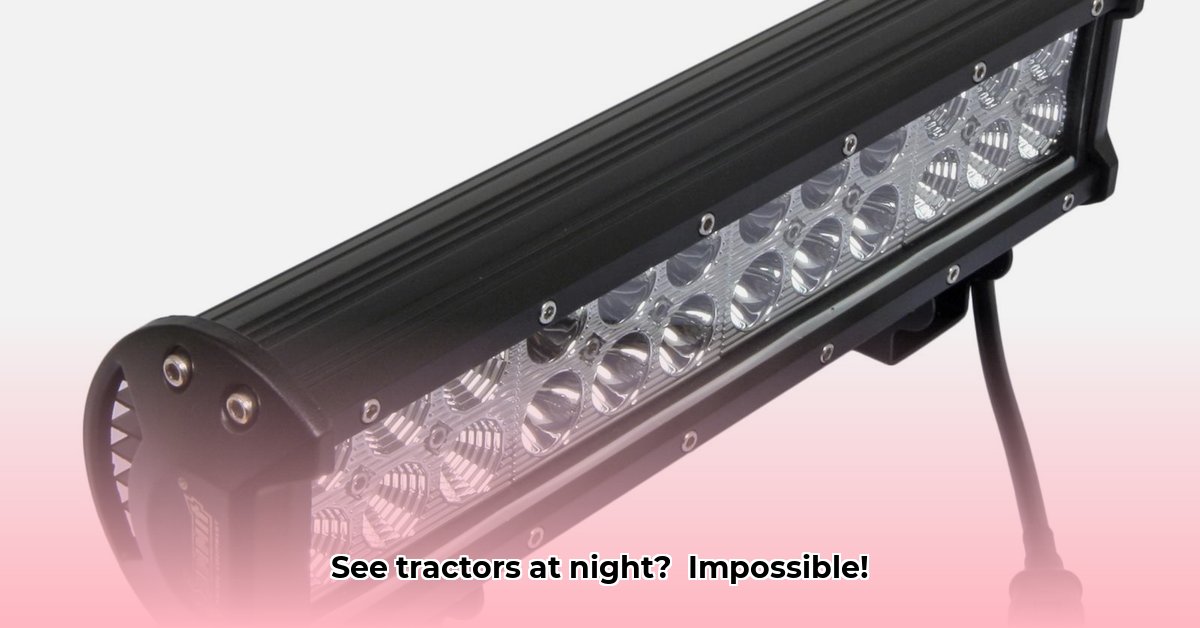
Light Bars for Tractors: Illuminating Your Nighttime Operations
Farming after dark presents unique challenges. However, enhancing nighttime visibility on your tractor significantly improves both safety and productivity. LED light bars offer a powerful solution, dramatically improving your ability to work safely and efficiently in low-light conditions. This guide provides actionable steps for selecting, installing, and maintaining these crucial additions to your farming equipment. For more on tractor lighting, check out this helpful resource on tractor lighting.
Understanding Your Needs: Choosing the Right Light Bars for Your Tractor
Before purchasing, assess your specific requirements. Consider your tractor's size (compact, mid-size, or large), typical working environment (open fields, confined spaces, or near roads), terrain (smooth or rough), budget, and desired features (e.g., flashing lights, multiple beam patterns). A small tractor operating in a well-lit area requires less powerful lighting than a large combine harvester working in dark, uneven terrain. This careful assessment ensures you select the optimal light bar for your needs. Don't forget, higher lumen output generally correlates with higher cost.
Types of Tractor Light Bars: A Detailed Overview
LED light bars vary across several key specifications. Understanding these differences is vital for making an informed decision.
Wattage and Lumen Output
Wattage reflects power consumption (higher wattage usually equals brighter light, but also higher energy use). Lumen output, however, directly measures the light's brightness (higher lumens mean better visibility). Prioritize lumens over wattage for optimal visibility. Remember, you need to balance brightness requirements with your tractor's electrical system capacity. Overloading the system can cause significant problems.
Mounting Options and Beam Patterns
Mounting options range from universal brackets for broader compatibility to tractor-specific mounts for a secure, custom fit. Ensure compatibility before purchasing. Beam patterns include spot (focused, long-range), flood (wide, even coverage), and combo (a blend of both). The best choice depends on your operational environment—spot for long distances, flood for close-range illumination, and combo for versatile applications.
Installing Your New Light Bars: A Step-by-Step Guide
Proper installation is paramount for both performance and safety. Incorrect wiring or mounting can damage your equipment and even create hazards.
Step 1: Preparation
- Thoroughly read your tractor's manual and the light bar's instructions.
- Gather necessary tools (screwdrivers, wrenches, wire strippers, electrical tape).
- Inspect your tractor's electrical system; ensure it can handle the light bar's power draw.
Step 2: Secure Mounting
- Attach the mounting brackets to your tractor, ensuring a firm and secure fit. Use appropriate hardware.
- Confirm that the mounting doesn't interfere with any moving parts or safety mechanisms.
Step 3: Wiring Connections
- Carefully connect the light bar's wiring harness to your tractor's electrical system.
- Caution: Incorrect wiring can lead to short circuits or even fire. If uncertain, seek professional help.
Step 4: Testing and Adjustments
- Test the lights to ensure proper function and alignment.
- Adjust the light bar position to optimize visibility and minimize glare.
Maintaining Your Light Bars: Ensuring Long-Term Performance
Regular maintenance extends the lifespan of your light bars.
- Cleaning: Regularly clean the lenses to maintain optimal light output.
- Bulb Replacement: While LEDs are durable, they eventually fail. Replacement is typically straightforward (check manufacturer instructions).
- Power Consumption: Note the total wattage of all lights to avoid exceeding your tractor's capacity.
Cost-Benefit Analysis: Long-Term Savings and Improved Safety
The initial cost of LED light bars is offset by long-term benefits such as:
- Extended Lifespan: LEDs last considerably longer than traditional bulbs, reducing replacement costs.
- Enhanced Safety: Improved nighttime visibility directly contributes to accident prevention.
- Increased Productivity: Safer, extended night-time operation allows more work to be completed.
Safety Considerations: Prioritizing Safe Operation
Proper installation and regular maintenance are paramount. Always adhere to local safety regulations regarding agricultural equipment lighting. Remember, safety is never a compromise. Investing in properly installed, high-quality LED lighting demonstrates a clear commitment to safe and productive farming.
Sample Light Bar Specifications (Example)
| Feature | Specification |
|---|---|
| Wattage | 100W |
| Lumen Output | 10,000 lumens |
| Beam Pattern | Combo (Spot/Flood) |
| Mounting | Universal Bracket |
| IP Rating | IP67 (indicates dust and water resistance) |
This guide will help guide your decision-making process. Always consult the manufacturer's instructions for your specific model, and if you're unsure about any aspect of installation or maintenance, contact a qualified professional. Safe and efficient operation should always be your top priority.